Books

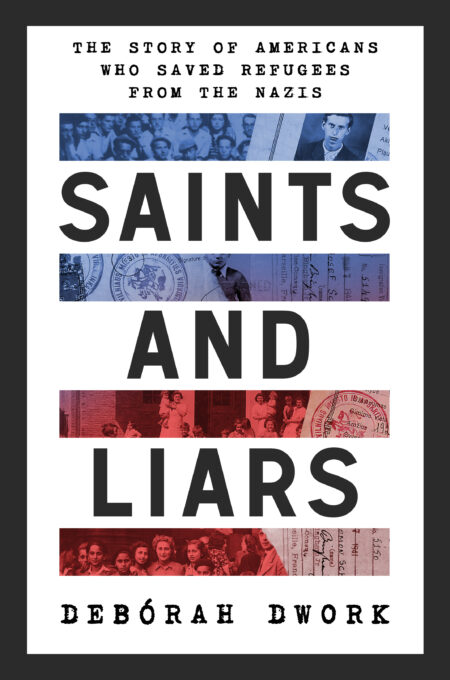
Cover of Saints and Liars

Saints and Liars: The Story of Americans Who Saved Refugees from the Nazis

Dwork, Debórah (2025). New York: W.W. Norton.

Selected by Library Journal as a Stellar Book for 2025. Finalist, National Jewish Book Award in Nonfiction.

In Saints and Liars, Debórah Dwork tells a gripping story of individual American activists navigating the dark corners of wartime Prague, Vilna, Shanghai, Marseille, and Lisbon in an effort to save vulnerable people from the Nazis. Her book reads like a novel by Alan Furst or Joseph Kanon, while also delivering a powerful and moving portrait of what brave (though complicated) people could do in response to Nazi persecution.

Benjamin Hett, Professor of History, CUNY; Author of The Nazi Menace

Startlingly relevant in today's worldwide refugee crisis, Saints and Liars serves as a primer to all of us trying to understand the complex, messy and urgent work of rescue.
Gwen Strauss, Director, Dora Maar Cultural Center; Author of The Nine

Visit saintsandliars.org →

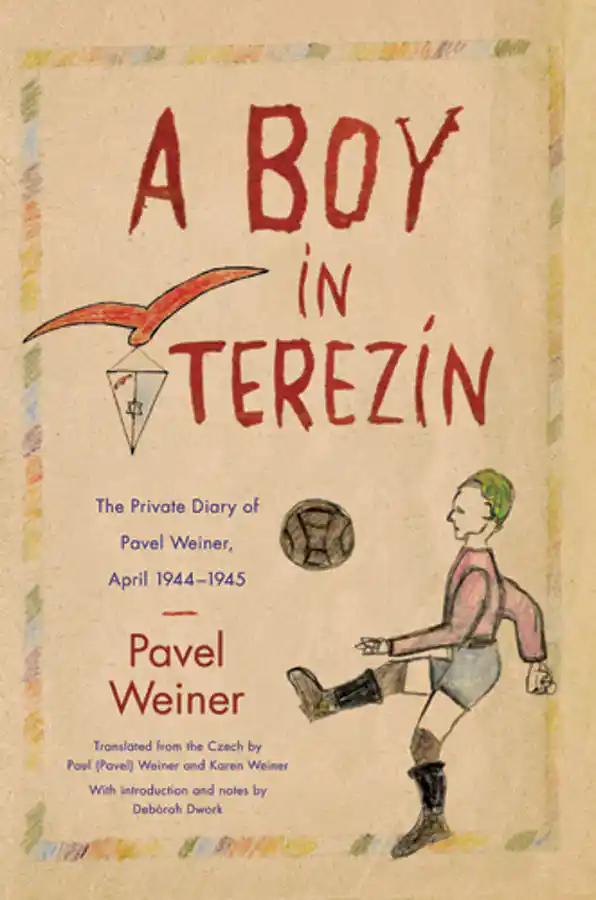
Cover of A Boy in Terezin

A Boy in Terezin: The Private Diary of Pavel Weiner, April 1944–April 1945

Weiner, Pavel; Dwork, Debórah, ed. (2012). Evanston, IL: Northwestern University Press.

Written by a Czech Jewish boy in the transit camp the Germans called Theresienstadt, A Boy in Terezin covers a year of his life — from April 1944 until liberation in April 1945, his bar mitzvah year. Famous people and infamous figures flit across the pages, but the focus is always on Pavel. Through him, we see how youngsters lived life on many levels, negotiating the complexity of the transit camp regime.

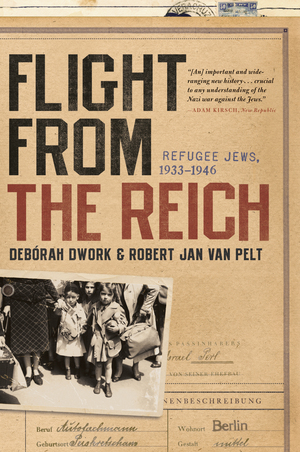
Cover of Flight from the Reich

Flight from the Reich: Refugee Jews, 1933–1946

Dwork, Debórah; van Pelt, Robert Jan (2009). New York: W.W. Norton. Translations: Dutch (Elmar); French (Calmann-Lévy).

ForeWord Reviews Book of the Year Award Finalist.

Fleeing did not write refugees out of the story of the Holocaust — it simply took the story elsewhere. Flight from the Reich opens the geographic view of the Holocaust, integrates the refugee experience, and extends the temporal frame to the postwar years. The authors braid the private and the public realms, personal memory and official history.

A bright shining accomplishment in Holocaust studies. A great and powerful book — a masterpiece in its own right.

Open Letters
Cover of The Terezín Album of Mariánka Zadikow

The Terezín Album of Mariánka Zadikow

Dwork, Debórah (2008). Chicago: University of Chicago Press.

An imprisoned bookbinder secretly crafted a small blank book from pilfered materials at the Terezín transit camp in September 1944, presenting it to a fellow prisoner, twenty-one-year-old Mariánka Zadikow. As the Germans pressed forward with mass deportations to Auschwitz, Mariánka collected inscriptions and sketches from her fellow inmates. The words and images — by children and grandparents, factory workers and farmhands, musicians and artists — offer an intimate window onto history.

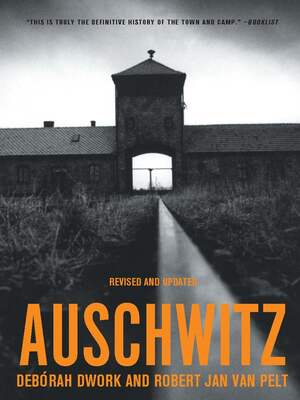
Cover of Auschwitz

Auschwitz (Revised Edition, 2008); Auschwitz: 1270 to the Present (First Edition, 1996)

Dwork, Debórah; van Pelt, Robert Jan. New York: W.W. Norton. Translations: Czech, Dutch, German, Polish.

National Jewish Book Award and the Spiro Kostoff Award. Selected by Newsweek as one of the Ten Best Books about Poland during World War II. Emmy-nominated BBC documentary, "Auschwitz: The Blueprints of Genocide."

Dwork and van Pelt's innovative use of architectural evidence to understand Auschwitz broke new historiographical ground. Moving their lens from German plans and practices to the lived experience of Jewish inmates, they produced a work of enduring historical and moral weight.

A vivid new representation of the Holocaust's unfolding. The rigor and directness of their account shakes even the knowledgeable reader.

The Wall Street Journal
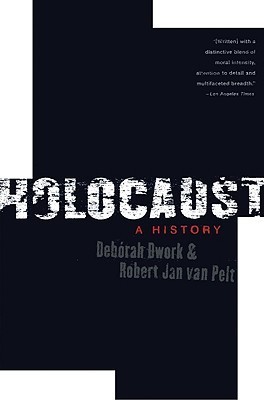
Cover of Holocaust: A History

Holocaust: A History

Dwork, Debórah; van Pelt, Robert Jan (2002). New York: W.W. Norton. Translations: Dutch, Portuguese, Spanish.

National Jewish Book Award Finalist.

The first work to marry the history of World War II and the history of the Holocaust, and to intertwine the history of the perpetrators and that of the victims. Tracking the Germans' assault on the Jews as the Reich devoured Europe, Holocaust tells a story of social, political, and cultural upheaval, and moral agony.

The reader looking for a clear and readable account of how Hitler and the Nazis came to conceive and carry out their diabolical project need look no further.

Boston Globe
Cover of Voices and Views

Voices and Views: A History of the Holocaust

Dwork, Debórah, ed. (2002). New York: Jewish Foundation for the Righteous / University of Wisconsin Press.

An edited, annotated, and illustrated collection — a scholarly project undertaken for public service. Dwork brought together many of the most important figures in Jewish scholarship to produce a definitive collection of essays, documents, and images on the Holocaust.

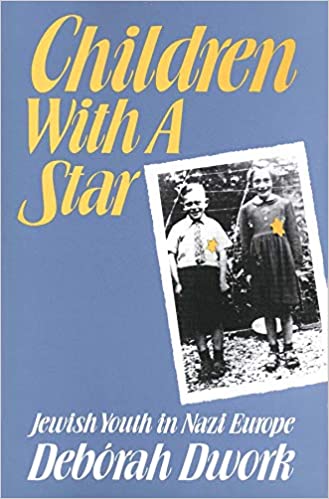
Cover of Children With A Star

Children With A Star: Jewish Youth in Nazi Europe

Dwork, Debórah (1991). New Haven: Yale University Press. Translations: Dutch, German, Italian, Japanese.

National Jewish Book Award Finalist.

Recognizing that history focused on the adult world and that children were seen as future participants in that realm, Dwork imagined a new "child-centered" approach — a wholly original theoretical development that opened a fresh area of historical investigation. The now classic Children With A Star was the first history of the daily lives of young people caught in the net of Nazism.

Debórah Dwork possesses the art of inducing survivors to speak, just as she possesses the art of listening.

Elie Wiesel, Newsday
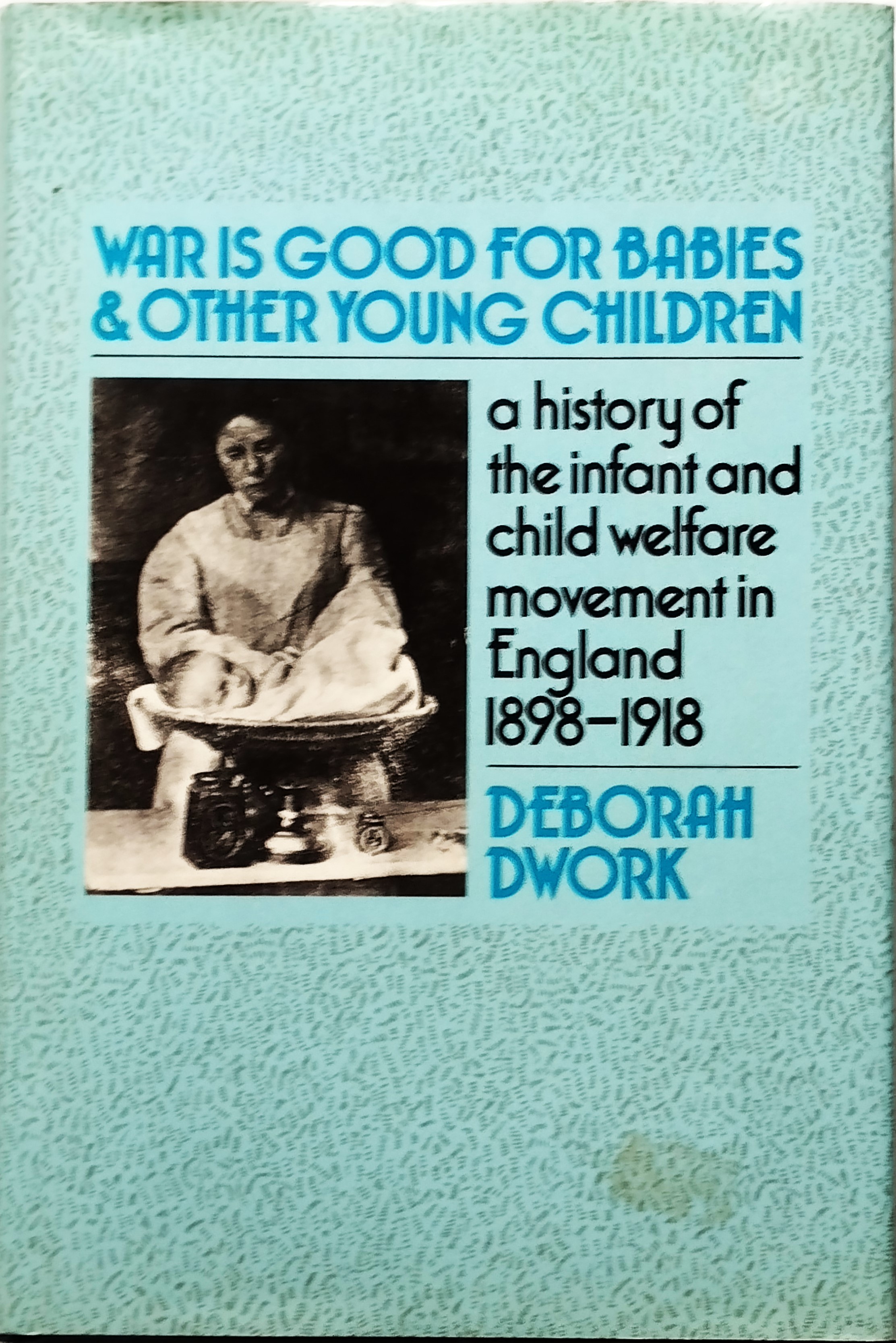
Cover of War Is Good for Babies

War Is Good for Babies and Other Young Children: A History of the Infant and Child Welfare Movement in England, 1898–1918

Dwork, Debórah (1987). London; New York: Tavistock Publications.

War is Good for Babies examines the development of a modern welfare system prior to the introduction of the welfare state, exploring the interests of the state and the sanctity of the family, the role of women in the home and the workforce, and the concept of children's rights and their need for protection.